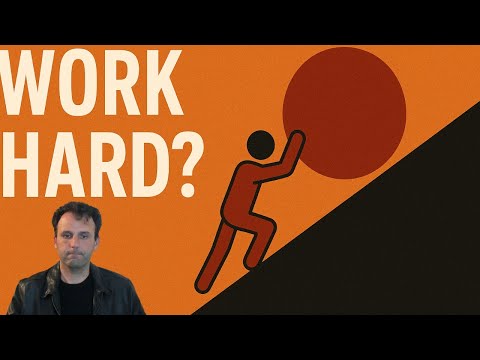

The Correlation Between Hard Work and Success
The relationship between hard work and success is not always linear. It fluctuates over time and is influenced by various factors, including technological advancements and societal shifts. This article explores when it makes sense to work hard and when it might be a waste of time.
Historical Context and Shifting Perceptions
In the 20th century, particularly in the United States, the correlation between hard work and success was generally positive. Putting in effort typically led to good outcomes, and exceeding the efforts of peers often resulted in greater success. However, the 2000s saw a decline in this correlation due to factors like technological disruptions and globalization. Increased college enrollment, for example, diminished the competitive advantage previously gained through higher education. The pandemic further shifted the mentality from "live to work" to "work to live". In recent years, though, there has been a resurgence in the positive correlation, fueled by AI and a decreased workforce participation.
The Problem with Constant Hard Work: The Protestant Work Ethic
A "grindset" mentality, which emphasizes perpetual hard work for its own sake, can be detrimental. This echoes Max Weber's concept of the Protestant work ethic, which suggests inherent morality in simply working, even without a disproportionate reward. This perspective can lead to burnout and a neglect of other important aspects of life.
When Hard Work Doesn't Make Sense
Hard work is not always the answer. It's essential to assess the potential return on investment before dedicating excessive effort.
-
Minimal Reward: When the additional effort required yields only a marginal increase in reward compared to doing the bare minimum, it's often not worth it.
-
GPA Example: For instance, in college, exceeding a certain GPA (e.g., 3.5) might not significantly impact job prospects if one is not pursuing an elite graduate program. The extra time spent studying could be better utilized for networking, hobbies, or personal well-being.
-
Seniority-Based Promotions: In environments where promotions are based solely on seniority, exceeding the minimum job requirements will not accelerate advancement.
When Hard Work Does Make Sense
There are specific scenarios where putting in the extra effort is justified and can lead to significant rewards.
-
Directly Correlated Payout: When your efforts directly and disproportionately impact your outcome.
-
Building a Reputation Early in Corporate Setting: Putting in the extra effort early in a new job builds a reputation for competency which can yield disproportionate results.
-
Career Advancement or Change: Investing time in self-education and skill development can lead to better job opportunities or entrepreneurial ventures, potentially offering a higher return than striving for a small promotion.
-
Entrepreneurship: Starting your own business often requires immense dedication and long hours, but the rewards—financial independence and control—can be substantial.
-
Competitive Skill-Based Endeavors: High level skill-based endeavors like professional sports will often reward a hard work ethic.
-
Market Volatility: In volatile market conditions, dedicating significant time to research and analysis can yield substantial profits due to increased buying opportunities.
-
Business and Industrial Cycles: Certain periods in business cycles present unique opportunities that require intense focus and effort.
-
Prestigious but Difficult Paths: Undertaking challenging endeavors like attending a prestigious university or pursuing a medical degree necessitates hard work due to the inherent demands of the program.
-
Clear, Attainable Goals: When the goal is clearly defined and attainable, and the effort required is directly within your control, hard work is often justified. Examples include med school or a well-defined business plan.
The Importance of Seasonality and Avoiding Burnout
Hard work should be viewed as a seasonal endeavor, not a perpetual state. Constant grinding can lead to burnout and health problems. It's essential to periodically assess whether the effort being invested is truly worth the reward. Find the situations where hard work is most rewarded and focus your energy there, with a definable end point in mind.
A Balanced Approach
The key is to adopt a balanced approach that prioritizes strategic hard work over blind dedication. Identify opportunities where your efforts will be most rewarded and focus your energy there.
 {#
{#